

Modern streetwear hats have evolved from simple functional accessories into important elements of contemporary fashion. They can complete an outfit, communicate personal identity, represent a brand, or add an artistic touch to an otherwise simple look. From baseball caps and fitted hats to snapbacks, dad hats, beanies, and experimental headwear, every design contains specific elements that influence its appearance, comfort, and performance in House of Error clothing.
Understanding the anatomy of modern streetwear hats helps explain why different styles look and feel so different. The crown, panels, brim, closure, materials, stitching, embroidery, hardware, and finishing techniques all contribute to the final design. Although these details may seem small individually, they work together to determine the hat’s shape, comfort, durability, and visual identity.
For streetwear enthusiasts, these details can make a significant difference. A structured crown can create a sharp silhouette, while an unstructured crown offers a relaxed appearance. A flat brim can make a hat feel bold and contemporary, while a curved visor can produce a classic aesthetic. Materials and decorative details can further transform the personality of a piece.
The anatomy of modern streetwear hats is therefore not simply about identifying different parts. It is about understanding how those parts work together to create modern headwear that combines function, design, culture, and individuality.
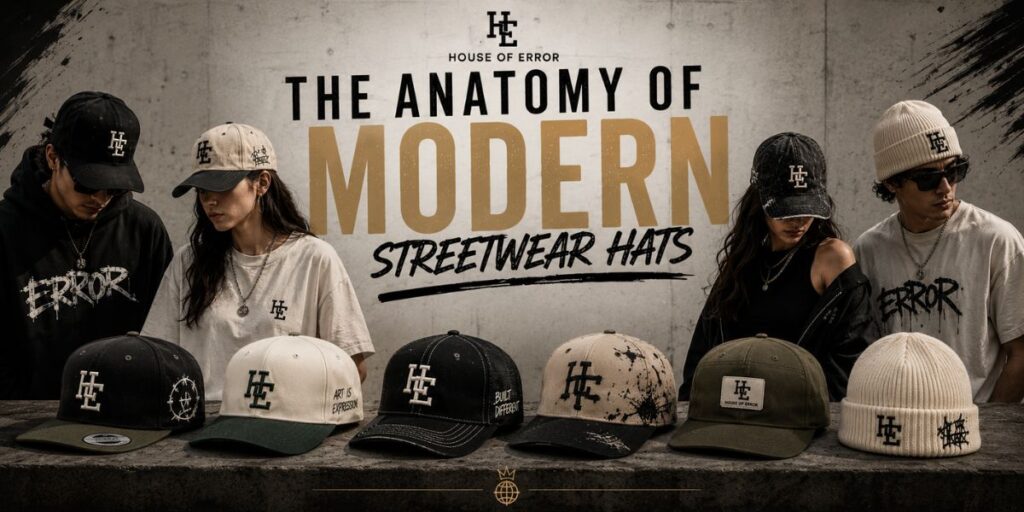
Table of Contents
Understanding Streetwear Hat Anatomy
The anatomy of a streetwear hat includes the physical components and construction techniques used to create a finished piece. While traditional headwear often focused primarily on protection from weather and sunlight, modern streetwear has expanded the role of hats into fashion and self-expression.
The most recognizable components include the crown, panels, brim or visor, closure, sweatband, seams, and stitching. Some designs also include embroidery, patches, printed graphics, metal hardware, labels, and distressed finishes.
Every component can influence the final appearance. The crown determines much of the silhouette, while the brim changes the profile of the modern hats. Closures influence both fit and appearance, and fabric choices affect texture and comfort.
When designers understand the anatomy of modern streetwear hats, they can manipulate these elements to create recognizable styles. Even a small adjustment to crown height, panel shape, or brim curvature can produce a noticeably different result.
The Crown and Its Role in Hat Design
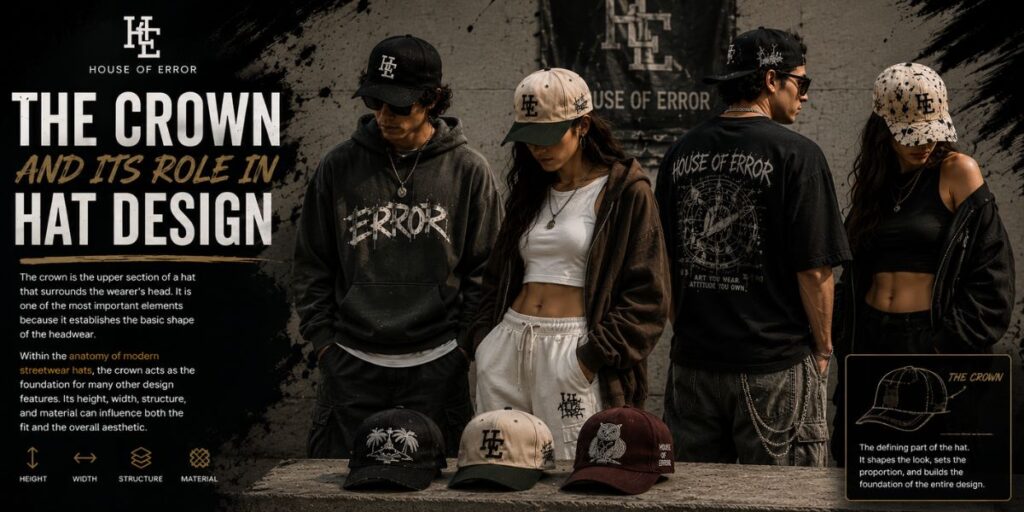
The crown is the upper section of a hat that surrounds the wearer’s head. It is one of the most important elements because it establishes the basic shape of the headwear.
Within the anatomy of modern streetwear hats, the crown acts as the foundation for many other design features. Its height, width, structure, and material can influence both the fit and the overall aesthetic.
Crown Height and Shape
Crown height can dramatically change the personality of a hat. A higher crown may create a stronger and more traditional silhouette, while a lower crown usually feels more understated and contemporary.
Streetwear designers often experiment with crown proportions. Low-profile hats can complement minimalist outfits, while oversized crowns may become a statement element.
The shape of the crown also determines how the hat sits on the head. Rounded crowns tend to create softer profiles, while angular or structured crowns can produce a sharper appearance.
Structured Crowns
Structured crowns contain internal reinforcement that helps maintain their shape. Even when the hat is removed, the crown can retain a defined profile.
Structured construction is common in fitted caps, sports-inspired designs, and premium streetwear headwear. It also creates a stable surface for logos, embroidery, and graphic applications.
Because of their defined shape, structured hats often feel more polished. They can work particularly well with outfits that feature clean silhouettes and coordinated proportions.
Unstructured Crowns
Unstructured crowns are softer and more flexible. They naturally adapt to the shape of the wearer’s head instead of maintaining a rigid form.
Dad hats, vintage-inspired caps, and relaxed streetwear designs frequently use this construction. The softer shape creates an effortless appearance that works well with casual clothing.
The contrast between structured and unstructured designs is one of the clearest examples of how construction influences style.
Hat Panels and Construction
Panels are individual sections of fabric that are stitched together to create the crown. They are an essential part of streetwear hat construction and play a major role in determining the final shape.
Common Panel Configurations
Six-panel construction is common in traditional baseball caps, while five-panel construction is strongly associated with skateboarding, outdoor-inspired, and contemporary streetwear.
The number of panels can affect the geometry of the crown. Five-panel designs may create a streamlined appearance, while six-panel caps often produce a rounded traditional profile.
Designers can also experiment with panel proportions, materials, colors, and seam placement to create more distinctive silhouettes.
Panel Seams and Stitching
The seams connecting the panels provide structural support, but they can also become visual details.
Clean stitching can create a refined appearance, while exposed or contrasting stitching can make a hat look rugged or handcrafted. Some contemporary designers intentionally highlight seams to emphasize the construction.
In the anatomy of modern streetwear hats, stitching is therefore both functional and decorative.
The Brim or Visor
The brim is attached to the front of a cap and provides protection from sunlight. In streetwear, however, it also has a strong influence on the visual identity of the hat.
Its curvature, length, width, and material can completely change the silhouette.
Flat Brims
Flat brims create a bold and structured appearance. They are strongly associated with certain sports, hip-hop, and contemporary streetwear styles.
A flat visor can make the hat look more graphic and prominent, particularly when combined with a structured crown and large embroidered logo.
Curved Brims
Curved brims offer a softer and more traditional appearance. They are common on baseball caps and dad hats.
The curve can make the overall silhouette feel more relaxed and approachable, making it suitable for everyday streetwear outfits.
Brim Proportions
Brim length and width also influence the balance of a hat. A shorter brim can create a compact appearance, while a wider visor can make the accessory more visually dominant.
Designers may also use the underside of the brim as a creative area. Contrasting colors, prints, patterns, or branding can add another layer of visual detail.
Closures and Adjustable Fit
Closures are located at the back of many adjustable hats. Their main purpose is to control the fit, but they can also influence the style.
Snapback Closures
Snapbacks use plastic fastening points that allow the wearer to adjust the circumference. This construction became highly recognizable within sports and streetwear culture.
The visible plastic strap contributes to a casual aesthetic while providing practical adjustability.
Strapback Closures
Strapbacks use a fabric, cotton, or leather strap combined with a buckle or fastening mechanism.
Compared with plastic snapbacks, strapback designs can feel softer and more refined. Leather hardware can also add a premium touch.
Fitted Construction
Fitted caps are manufactured in specific sizes rather than using an adjustable closure.
This provides a precise fit and creates a clean appearance. Fitted construction remains popular in sports-inspired and premium streetwear.
Understanding closures is an important part of the anatomy of modern streetwear hats because the back of the hat can influence both functionality and aesthetics.
Structured vs Unstructured Hats
The difference between structured and unstructured construction is an important consideration when examining the anatomy of modern streetwear hats.
Structured hats use internal support to maintain their shape. They usually appear sharper and more defined.
Unstructured hats have softer crowns that naturally adapt to the head. Their relaxed construction makes them particularly suitable for casual and vintage-inspired outfits.
Neither option is universally better. The choice depends on the intended aesthetic, fit preference, and outfit.
Someone looking for a polished streetwear appearance may prefer a structured cap, while someone interested in a relaxed everyday style may choose an unstructured design.
Materials Used in Modern Streetwear Hats
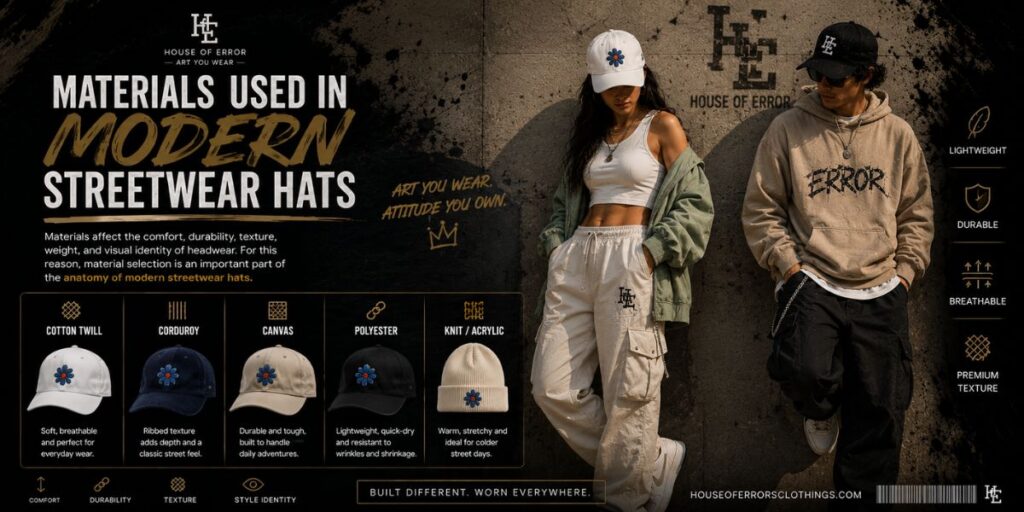
Materials affect the comfort, durability, texture, weight, and visual identity of headwear. For this reason, material selection is an important part of the anatomy of modern streetwear hats.
Cotton
Cotton is one of the most common materials used in streetwear headwear. It is comfortable, breathable, and versatile.
Cotton can also be washed, dyed, faded, or distressed. These properties make it useful for both modern and vintage-inspired designs.
Denim
Denim provides a rugged and durable character. It works particularly well with workwear-inspired and vintage streetwear aesthetics.
Different washes can create a range of appearances, from clean and dark to heavily faded.
Nylon
Nylon is lightweight and practical. It is often used in technical, athletic, and outdoor-inspired headwear.
Its smooth surface can create a futuristic appearance when combined with minimalist branding and functional details.
Wool and Wool Blends
Wool provides warmth and texture, making it particularly useful for colder seasons. It can also give a hat a more premium appearance.
Wool blends may provide additional durability and softness while maintaining the visual character of natural fibers.
Premium and Experimental Materials
Contemporary designers may also use canvas, mesh, suede, leather, and technical fabric blends.
Combining materials can create contrast and depth. For example, a cotton crown with leather detailing can produce an elevated streetwear aesthetic.
Embroidery and Graphics
Graphics are among the most recognizable elements of modern streetwear headwear. They allow brands and designers to communicate identity, culture, artwork, and creative ideas.
Embroidered Streetwear Hats
Embroidery adds texture and dimension to a hat. Logos, lettering, symbols, illustrations, and abstract patterns can be stitched directly onto the fabric.
The size and placement of embroidery are important. A small logo can create a subtle appearance, while oversized embroidery can turn the hat into the focal point of an outfit.
High-quality embroidery should have clean edges, consistent stitching, and balanced thread density. These details can make a major difference in the perceived quality of a product.
Printed Graphics
Printing allows designers to create highly detailed artwork. Complex illustrations, patterns, and colorful graphics can be applied to suitable fabrics.
Streetwear brands frequently use printed graphics to communicate a message or establish a recognizable visual identity.
When combined with thoughtful construction, graphics can become more than decoration. They can reinforce the entire design concept.
Hardware and Metal Details
Hardware adds another layer of character to contemporary headwear. Buckles, rings, eyelets, clips, pins, and other metal elements can create an industrial or experimental aesthetic.
Hardware can be functional, decorative, or both. A buckle may help adjust a strap while also contributing to the visual identity.
Minimal metal details can create a subtle premium appearance, while larger components can make a hat feel more aggressive or avant-garde.
These details demonstrate how the anatomy of modern streetwear hats extends beyond fabric and basic construction.

Distressed and Vintage Finishes
Distressing has become an important technique within modern streetwear. Designers may use fading, washing, fraying, worn edges, and surface treatments to create an aged appearance.
Creating a Worn-In Appearance
A distressed hat can look as though it has developed its character through years of use.
This aesthetic works especially well with vintage-inspired streetwear because it creates a sense of history and individuality.
However, successful distressing requires balance. Controlled fading and subtle wear can look intentional and premium, while excessive damage may make a product appear poorly constructed.
The best designs combine carefully planned distressing with strong underlying construction.
How Construction Influences Style
Construction directly influences how a hat interacts with the rest of an outfit. This is one of the most useful lessons from the anatomy of modern streetwear hats.
A structured fitted cap can complement clean clothing and sharp silhouettes. An unstructured dad hat may work better with oversized shirts, relaxed denim, hoodies, and casual footwear.
A technical nylon hat can support an athletic or futuristic look, while a distressed cotton cap can complement vintage-inspired clothing.
Even the position of a hat on the head can influence the overall appearance. Wearing a structured cap forward can create a traditional silhouette, while a relaxed hat worn naturally can produce a more effortless look.
Popular Types of Modern Streetwear Hats
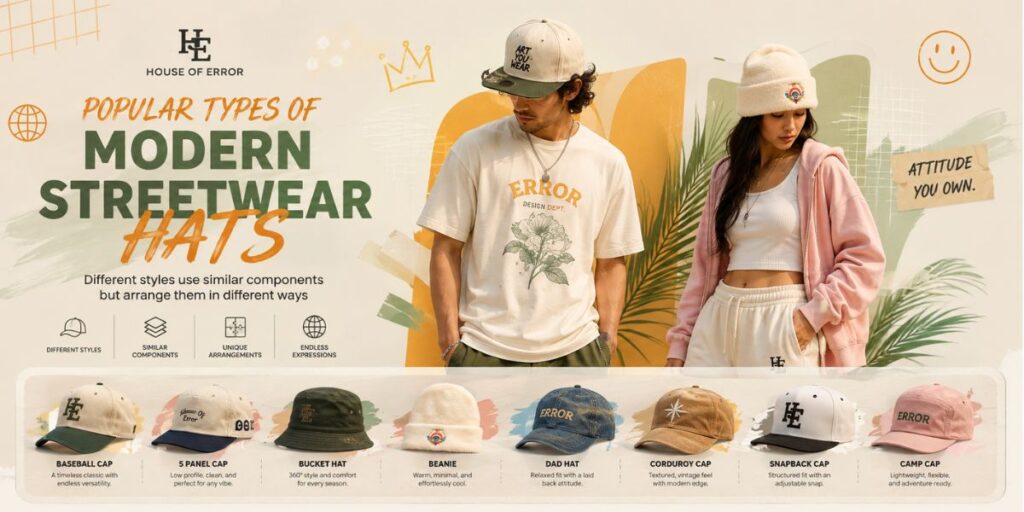
Different styles use similar components but arrange them in different ways.
Baseball Caps
Baseball caps remain one of the most versatile forms of streetwear headwear. They can feature structured or unstructured crowns, curved or flatter brims, and adjustable or fitted construction.
Their versatility allows them to work with minimalist, athletic, vintage, and contemporary outfits.
Dad Hats
Dad hats typically feature soft crowns, curved brims, and adjustable closures.
Their relaxed shape makes them popular for casual styling. Washed fabrics and small embroidered logos are particularly common within this category.
Fitted Caps
Fitted caps are produced according to specific head sizes. Their lack of an adjustable closure creates a clean and consistent appearance.
They remain strongly connected to sports culture while also appearing in premium streetwear collections.
Snapbacks
Snapbacks are recognized by their adjustable plastic closures. They often feature structured crowns, flat brims, bold embroidery, and strong graphics.
Their history within sports and hip-hop culture has helped establish them as an enduring streetwear accessory.
Beanies
Beanies use knitted construction instead of the traditional panel-and-brim structure found in many caps.
They provide warmth while adding a different texture and silhouette to an outfit. Cuffed, oversized, ribbed, and minimalist versions can all create different effects.
Experimental and Avant-Garde Headwear
Modern designers are increasingly challenging traditional definitions of hats. Experimental designs may feature oversized crowns, extended brims, asymmetrical panels, unusual fabrics, or unconventional hardware.
These approaches demonstrate how the anatomy of modern streetwear hats can be reinterpreted rather than simply repeated.
Designers can exaggerate one component, remove another, or combine several construction techniques to create something completely new.
Avant-garde headwear can function almost like wearable sculpture. Instead of serving only a practical purpose, it can communicate an artistic or conceptual idea.
This approach is particularly relevant to independent designers who want to create pieces that stand apart from mass-produced accessories.
Construction as Wearable Art
The physical construction of a hat can itself become an artistic language.
Instead of hiding seams and stitching, designers may intentionally expose them. Panel arrangements can become graphic patterns, while layered fabrics can create visual depth.
Oversized embroidery, unusual textures, contrasting materials, and visible construction details can transform a simple accessory into wearable art.
The anatomy of modern streetwear hats therefore demonstrates how functional elements can become creative features.
This philosophy reflects a larger principle within streetwear: ordinary clothing components can be redesigned and transformed into expressions of individuality.
Independent Designers Redefining Hat Anatomy
Independent streetwear designers often experiment with headwear in ways that challenge traditional manufacturing.
Smaller labels may explore handmade embroidery, custom hardware, unusual fabrics, limited-production methods, and unconventional silhouettes.
Because independent designers can often work with smaller production runs, they may have greater freedom to test new ideas.
Some designers focus on minimalism, using subtle construction and small branding. Others exaggerate proportions or introduce unexpected materials.
This experimentation continues to expand the anatomy of modern streetwear hats, proving that familiar components can be interpreted in new ways.

Quality and Construction
A high-quality hat should balance design, comfort, durability, and craftsmanship.
Clean stitching is an important indicator of quality. Strong seams help the hat maintain its shape, while reliable closures improve long-term usability.
The interior also matters. A comfortable sweatband and breathable fabric can significantly improve the wearing experience.
Balanced proportions are equally important. The crown, brim, panels, and closure should work together rather than appearing disconnected.
For premium streetwear products, these details matter because modern consumers increasingly evaluate quality beyond logos and branding.
Understanding the anatomy of modern streetwear hats can help buyers recognize these differences and make more informed choices.
The Future of Streetwear Hat Design
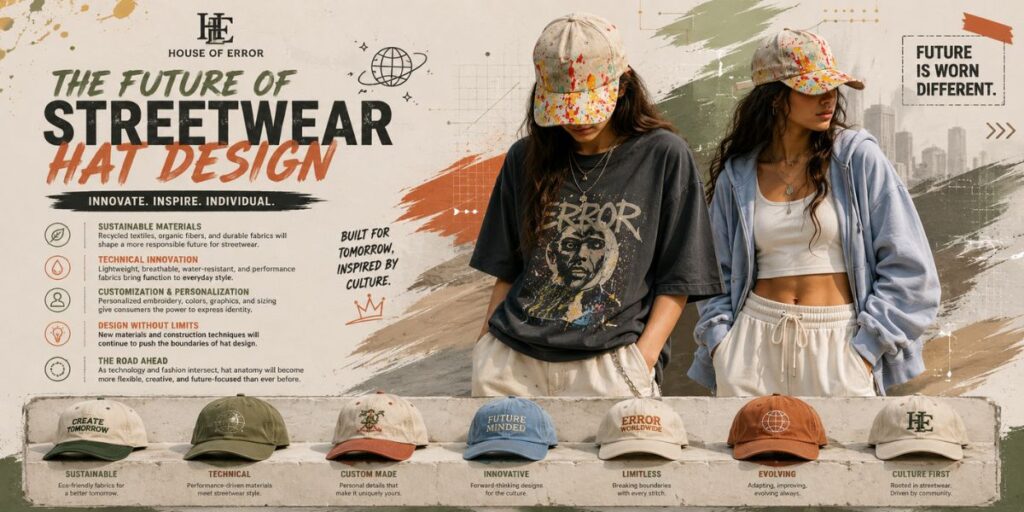
The future of streetwear headwear will likely involve continued experimentation with materials, construction, technology, and customization.
Sustainable materials may become increasingly important as brands look for ways to reduce waste and improve production practices. Recycled textiles and durable fabrics can provide new possibilities for designers.
Technical materials may also become more common. Lightweight, breathable, water-resistant, and performance-focused fabrics can introduce practical functions into everyday streetwear.
Customization is another important direction. Consumers increasingly want products that reflect their personal identity. Personalized embroidery, graphics, colors, and sizing could therefore become more common.
As technology and fashion continue to intersect, the anatomy of modern streetwear hats may become increasingly flexible. Traditional components could be combined with new materials and manufacturing techniques to create headwear that is both functional and visually experimental.
Conclusion
The anatomy of modern streetwear hats reveals how many individual components contribute to a successful headwear design. The crown, panels, brim, closure, materials, stitching, embroidery, hardware, and finishing techniques all influence the final product.
Understanding these elements also explains why different hat styles create different visual effects. Structured caps feel sharper, unstructured designs feel more relaxed, flat brims create stronger profiles, and distressed materials can introduce vintage character.
From baseball caps and dad hats to fitted caps, snapbacks, beanies, and experimental headwear, modern streetwear continues to redefine the role of hats in fashion.
What once served mainly practical purposes has developed into a platform for creativity, branding, culture, and individuality. As independent designers and established brands continue experimenting with construction and materials, streetwear headwear will likely become even more diverse.
For anyone interested in contemporary fashion, studying the anatomy of modern streetwear hats provides a deeper appreciation of the craftsmanship behind an accessory that may initially appear simple.
Frequently Asked Questions
What is the anatomy of modern streetwear hats?
The anatomy of modern streetwear hats includes the crown, panels, brim or visor, closure, stitching, materials, sweatband, and decorative elements such as embroidery, graphics, patches, and hardware.
What is the most important part of a anatomy of modern streetwear hats?
The crown is one of the most important components because it determines much of the anatomy of modern streetwear hats shape and fit. However, the brim, panels, closure, and materials also influence the final appearance.
What is the difference between structured and unstructured hats?
Structured hats contain internal support that helps maintain their shape, while unstructured hats use softer construction that naturally adapts to the wearer’s head.
What materials are commonly used in anatomy of modern streetwear hats?
Cotton, denim, nylon, wool, canvas, mesh, suede, leather, and technical fabric blends are commonly used in anatomy of modern streetwear hats.
Why is embroidery popular on anatomy of modern streetwear hats?
Embroidery adds texture and depth while allowing designers to display logos, lettering, symbols, and artwork directly on the surface of a
anatomy of modern streetwear hats.
Are fitted anatomy of modern streetwear hats better than snapbacks?
Neither style is universally better. Fitted caps provide a precise size-based fit, while snapbacks offer adjustable sizing and a recognizable streetwear aesthetic.
Why are distressed anatomy of modern streetwear hats popular?
Distressed finishes create a worn-in, vintage-inspired appearance. They can give a hat a sense of individuality and character when the finishing is carefully controlled by anatomy of modern streetwear hats.
See more: LORO PIANA.