

Streetwear headwear has become one of the most recognizable parts of modern urban fashion of House of Error Clothing. Caps, beanies, fitted hats, snapbacks, dad hats, bucket hats, and experimental headwear are now capable of changing the entire character of an outfit. A simple hoodie and pair of relaxed trousers can look completely different depending on the hat worn with them.
However, today’s fashion-focused approach to headwear did not happen overnight. Hats originally existed because people needed protection from the environment. They provided shade, warmth, and comfort, and many early styles were connected to work, sports, or outdoor activities. As different communities adopted these practical pieces, headwear gradually developed cultural meanings that went far beyond its original purpose.
Streetwear played a particularly important role in this transformation. Skateboarding, hip-hop, sports culture, music, underground art, and independent fashion all helped redefine the meaning of hats. A cap could represent a sports team, a city, a music scene, a community, or an individual’s personal identity.
In the modern era, independent streetwear labels have pushed this evolution even further. Through embroidery, graphics, hardware, unusual materials, distressing, and limited production, designers have transformed traditional headwear into statement pieces and collectible fashion objects.
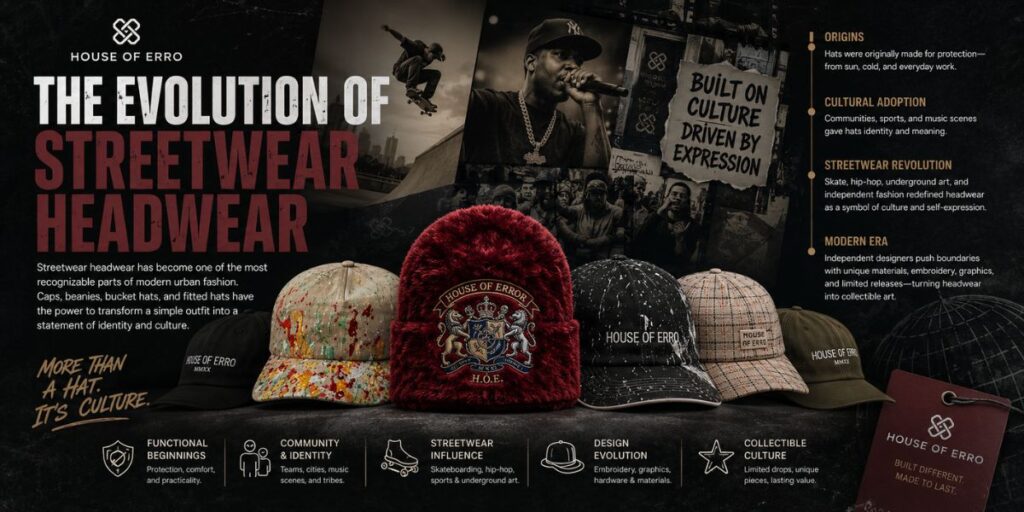
Table of Contents
The Functional Beginnings of Headwear
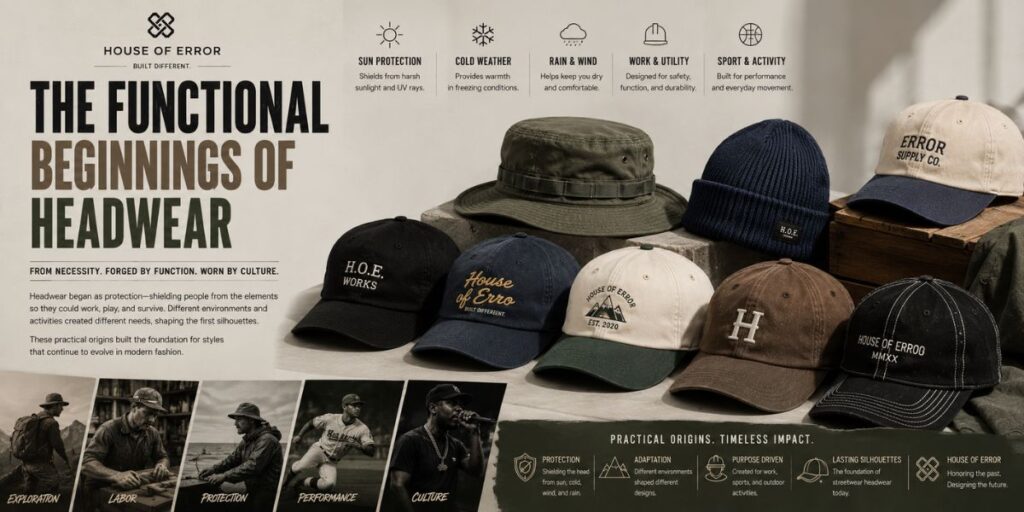
Before headwear became a major part of streetwear, its primary purpose was practical. People needed protection from sunlight, cold temperatures, rain, wind, and other environmental conditions.
Different environments created different types of headwear. Lightweight caps were useful in warm conditions, while knitted hats were more appropriate for cold weather. Workers and athletes also developed specific headwear preferences based on their activities.
These practical origins created the foundation for many silhouettes that are still used in modern fashion.
Protection From the Sun
One of the simplest purposes of a hat is protection from sunlight. Brimmed caps can reduce direct exposure around the eyes and face, making them useful for outdoor activities.
The baseball cap is one of the strongest examples of this concept. Its visor was practical, but the recognizable shape eventually became fashionable outside athletic environments.
Today, people may wear a cap for style rather than protection, but the original functional idea remains part of the design.
Beanies and Cold-Weather Protection
Beanies developed from a different functional requirement: warmth.
Knitted headwear was useful for people working or spending long periods outdoors in cold conditions. The close-fitting construction helped retain warmth and offered a simple alternative to heavier winter headwear.
Over time, the beanie moved from workwear into youth culture. Skateboarders and underground communities adopted the style because it was comfortable, simple, and compatible with casual clothing.
This transition demonstrates how a practical object can become culturally meaningful when a community gives it a new identity.
Workwear and Everyday Utility
Many traditional headwear styles were also connected to workwear. People needed clothing and accessories that could withstand physical activity and changing environments.
This practical background later influenced streetwear’s preference for durable materials, relaxed silhouettes, and clothing that could function in everyday life.
Modern streetwear still carries this philosophy. Even highly designed pieces often maintain a sense of practicality and wearability.
The Influence of Sports Culture
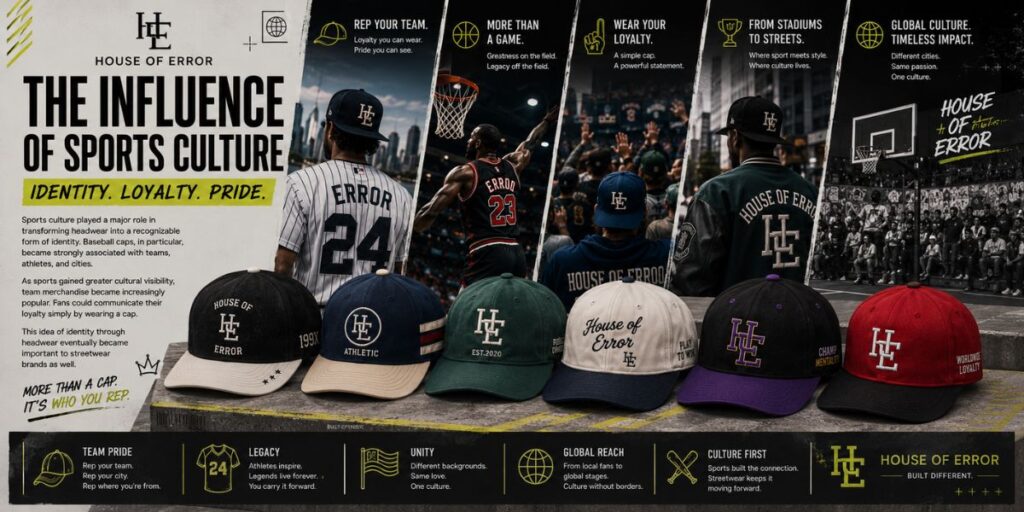
Sports culture played a major role in transforming headwear into a recognizable form of identity. Baseball caps, in particular, became strongly associated with teams, athletes, and cities.
As sports gained greater cultural visibility, team merchandise became increasingly popular. Fans could communicate their loyalty simply by wearing a cap.
This idea of identity through headwear eventually became important to streetwear brands as well.
Baseball Caps and Team Identity
The baseball cap offered a large front panel that could display a team logo. This made it both functional and highly visible.
A person wearing a particular team cap was not simply wearing a hat. They were showing a connection to a team, city, or community.
Streetwear later adopted the same visual principle. Logos and graphics became central elements of caps, allowing brands to build recognition through headwear.
The Cap Moves Beyond the Stadium
As baseball caps became part of everyday wardrobes, their connection with sports became less restrictive.
People started wearing streetwear caps with jeans, T-shirts, jackets, sweatshirts, and other casual clothing. Eventually, the baseball cap became a universal accessory rather than something limited to athletes or sports fans.
This was an important step in the evolution from function to fashion.
Sports Branding and Streetwear
Sports demonstrated how a small visual symbol could carry a significant amount of meaning. A logo could communicate loyalty and identity immediately.
Streetwear brands adopted this concept by creating their own recognizable graphics and embroidery.
ALL-SEEING CORDUROY CAP the front of a cap became a valuable branding space where designers could introduce symbols, typography, characters, or other visual elements.
How Hip-Hop Transformed Headwear Culture
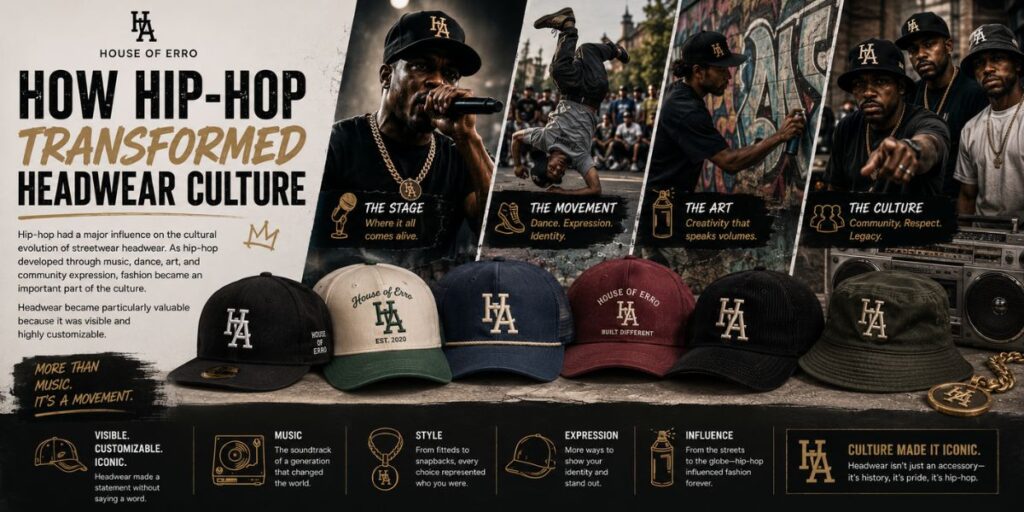
Hip-hop had a major influence on the cultural evolution of streetwear headwear. As hip-hop developed through music, dance, art, and community expression, fashion became an important part of the culture.
Headwear became particularly valuable because it was visible and highly customizable.
Headwear as Cultural Expression
In hip-hop culture, clothing was often used to communicate personality, confidence, identity, and community.
Hats became part of this visual language. A particular cap could be associated with a team, city, artist, neighborhood, or cultural movement.
This gave headwear a meaning that went beyond practicality.
The hat became part of the wearer’s identity rather than simply something placed on the head.
The Rise of Fitted Caps
Fitted caps became an important part of streetwear because of their structured construction and precise sizing.
Unlike adjustable hats, fitted caps are designed to fit specific head measurements. This can create a cleaner and more intentional appearance.
The structured crown also gives the headwear a stronger visual presence. Combined with embroidery or a recognizable logo, the cap can become one of the most noticeable parts of an outfit.
Snapbacks and Adjustable Style
Snapbacks offered another influential silhouette. Their adjustable closure made them practical, while their structured front panels provided a bold appearance.
The flat or relatively straight brim became associated with a more assertive streetwear aesthetic.
Snapbacks also provided plenty of space for graphics and embroidery, making them attractive to brands looking to create visually recognizable products.
Music and Headwear Identity
Musicians helped increase the visibility of different headwear styles. Artists could use caps and other accessories as part of their recognizable appearance.
Fans could then adopt similar styles, creating a relationship between music culture and fashion.
This relationship remains important today, as music continues to influence streetwear trends and independent fashion.
Skateboarding and Underground Street Culture
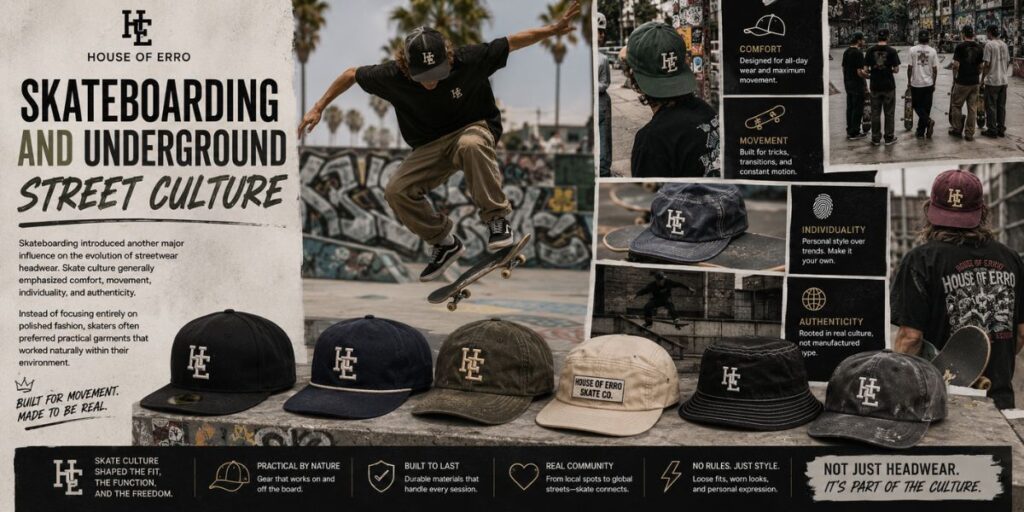
Skateboarding introduced another major influence on the evolution of streetwear headwear. Skate culture generally emphasized comfort, movement, individuality, and authenticity.
Instead of focusing entirely on polished fashion, skaters often preferred practical garments that worked naturally within their environment.
Beanies and Skate Culture
Beanies became strongly associated with skateboarding because they were comfortable and easy to wear.
A simple knitted beanie could work with hoodies, graphic T-shirts, loose trousers, denim, and skate shoes.
This created an aesthetic that felt relaxed and authentic.
The beanie’s association with skateboarding also helped separate it from its purely functional winter origins.
The Rise of Relaxed Silhouettes
Skate culture helped establish the idea that clothing did not need to look perfectly structured to be fashionable.
Relaxed caps, soft crowns, and slightly slouchy beanies became attractive because they communicated an effortless attitude.
This approach influenced modern dad hats and other unstructured caps.
Authenticity and Imperfection
Streetwear’s underground roots created an appreciation for clothing that looked lived-in rather than overly polished.
Faded fabrics, worn surfaces, loose fits, and distressed details could communicate authenticity.
This philosophy later became an important part of contemporary independent headwear design.
From Subculture to Global Fashion
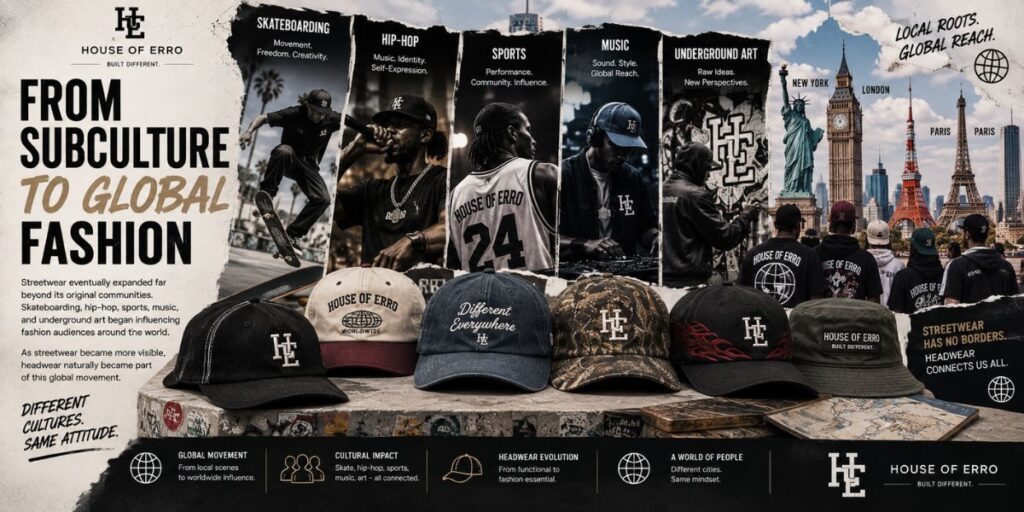
Streetwear eventually expanded far beyond its original communities. Skateboarding, hip-hop, sports, music, and underground art began influencing fashion audiences around the world.
As streetwear became more visible, headwear naturally became part of this global movement.
The Growth of Urban Fashion
Urban fashion created a strong connection between comfort and visual identity.
People wanted clothing that could be worn every day while still communicating a particular aesthetic.
Headwear was ideal for this purpose because it could dramatically change an outfit without requiring a complete wardrobe.
A single cap could make a basic outfit appear more sporty, relaxed, vintage, aggressive, artistic, or experimental.
Social Media and Headwear Trends
The rise of social media accelerated the global spread of streetwear.
People could see how others styled caps and beanies in different cities and cultures. New trends could spread quickly through photographs, videos, fashion pages, and online communities.
This made headwear even more important because it became highly visible in street-style photography and social content.
Streetwear Enters Mainstream Fashion
As streetwear gained international influence, the boundary between casual fashion and luxury fashion became less defined.
Designer clothing could be worn with sneakers, hoodies, caps, and other traditionally casual pieces.
Headwear therefore gained acceptance in more fashion environments.
A cap was no longer automatically considered informal. Its perception increasingly depended on its design, construction, materials, and brand identity.
The Contemporary Luxury and Hypebeast Shift
One of the biggest changes in modern streetwear has been the movement toward exclusivity and collectibility.
Headwear became part of this shift as brands began producing limited releases, collaborations, premium materials, and highly detailed designs.
Limited-Edition Headwear
Limited production can make a fashion item feel more exclusive.
When consumers know that only a small number of pieces are available, the product can become more desirable to collectors and dedicated fans.
Limited-edition headwear also helps brands build excitement around product launches.
The Power of Collaborations
Collaborations allow two creative identities to come together.
A streetwear brand might collaborate with an artist, musician, sports organization, or another fashion label to create a unique cap or beanie.
The resulting product can carry cultural meaning from both sides.
This has helped transform headwear into a collectible category within streetwear.
Premium Materials and Construction
Modern luxury streetwear has also increased attention toward quality.
Fabric selection, embroidery, stitching, hardware, panel construction, and finishing can all influence how a hat looks and feels.
A premium cap is therefore not defined only by its logo. Its construction and attention to detail also contribute to its value.
The Rise of Independent Streetwear Brands
Independent labels have become increasingly important in the development of modern headwear.
Unlike mass-market brands that often rely on familiar formulas, independent designers can experiment with unusual concepts and construction.
Experimental Hat Designs
Independent designers can change the proportions of a familiar silhouette or combine several visual elements into one piece.
A traditional cap might be redesigned with oversized embroidery, unusual paneling, custom hardware, or unexpected materials of.
This allows designers to create headwear that feels new while still being recognizable.
Custom Embroidery and Graphics
Embroidery is one of the most effective techniques for giving a cap or beanie a unique identity.
Designers can create detailed lettering, symbols, abstract graphics, characters, or brand motifs.
Because embroidery adds physical texture, it can make even a small design visually powerful.
Hardware and Metal Details
Hardware can give modern streetwear headwear an industrial or experimental appearance.
Metal accents, custom closures, decorative components, and other physical details can change the character of a traditional hat.
These details are especially useful for independent brands that want to separate their designs from conventional sports-inspired headwear.
Distressing and Vintage-Inspired Finishes
Intentional distressing has become another important design direction.
Faded colors, worn edges, aged fabrics, and imperfect surfaces can create a sense of history.
The goal is not simply to make the hat look damaged. Effective distressing is carefully controlled so that the imperfections become part of the design.
Headwear as Wearable Art
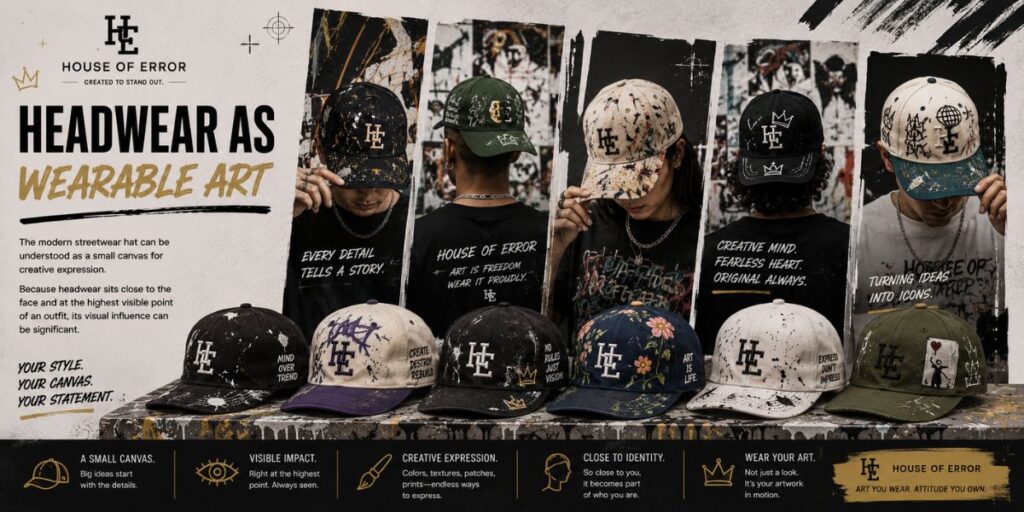
The modern streetwear hat can be understood as a small canvas for creative expression.
Because headwear sits close to the face and at the highest visible point of an outfit, its visual influence can be significant.
Hats as a Creative Canvas
A cap provides designers with several areas for experimentation.
The front panel can hold a major graphic. The side can contain embroidery or a patch. The back can feature branding or a custom closure.
Even the brim can become part of the design through color contrast or special finishing.
This allows a relatively small product to contain a surprising amount of creative detail.
Embroidery as a Design Language
Embroidery can create a sense of depth and craftsmanship.
Dense stitching can make lettering feel more substantial, while intricate patterns can create visual complexity.
For independent brands, a distinctive embroidery style can become part of the brand’s visual language.
Graphic Storytelling
Graphics can communicate ideas without requiring a large amount of text.
Symbols, illustrations, typography, and abstract imagery can represent a particular concept or aesthetic.
This makes headwear useful for brands that want their products to tell a story.
Headwear as a Symbol of Individuality
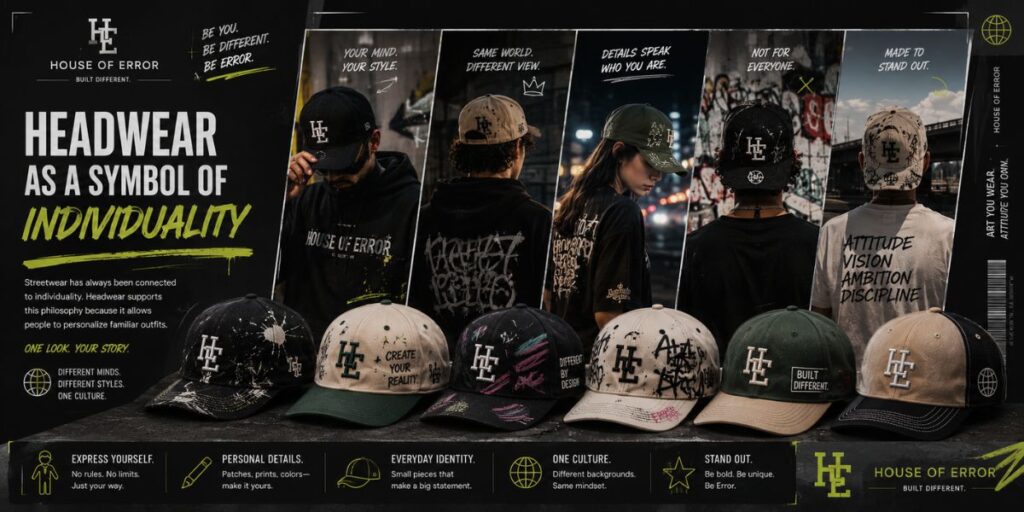
Streetwear has always been connected to individuality. Headwear supports this philosophy because it allows people to personalize familiar outfits.
Building a Personal Style
A person wearing a fitted cap may create a sharper appearance, while a dad hat can create a relaxed look.
A beanie can add an underground quality, while a highly experimental cap can make an outfit feel artistic.
These differences demonstrate how much influence a small accessory can have.
Creating a Recognizable Look
Some people develop a recognizable style around specific types of headwear.
They may consistently choose certain colors, silhouettes, embroidery styles, or brands.
Over time, these choices become part of their visual identity.
Cultural Identity Through Headwear
Headwear can also represent community.
Sports, music, skateboarding, street art, and independent fashion have all used hats as recognizable cultural symbols.
This cultural history helps explain why headwear can feel more meaningful than an ordinary accessory.
The Evolution of Hat Materials
The evolution of streetwear headwear is not limited to shapes and cultural associations. Materials have also changed significantly.
Traditional caps often relied on straightforward cotton, wool, canvas, or synthetic fabrics. Modern streetwear designers can combine materials to create new textures and visual effects.
Cotton and Twill
Cotton and twill remain popular because they are practical, versatile, and easy to style.
Lightweight cotton is particularly useful for warmer seasons, while heavier fabrics can provide a more substantial appearance.
Wool and Knitted Materials
Wool and knitted fabrics remain strongly associated with colder weather.
Modern designers can experiment with different knitting patterns, weights, textures, and embroidery to create beanies that feel contemporary rather than purely functional.
Experimental Materials
Independent designers can also explore materials that are less traditional for headwear.
Mixed fabrics, technical textiles, unusual finishes, and decorative elements can give a familiar silhouette a completely different character.
This experimentation demonstrates how the traditional hat continues to evolve.
Why Streetwear Headwear Remains Relevant
Despite constantly changing fashion trends, headwear has remained an important part of streetwear.
One reason is its versatility. A hat can be worn with many different types of outfits and can quickly change the overall aesthetic.
Another reason is cultural history. Caps and beanies carry decades of connections to sports, music, skateboarding, and urban communities.
Headwear also provides an accessible way to experiment with fashion. Someone does not need to completely change their wardrobe to create a new look. Changing the hat can be enough to introduce a different mood.
This combination of practicality, cultural meaning, and creativity ensures that headwear remains relevant.
The Future of Streetwear Headwear
The evolution of streetwear headwear is still continuing. Designers are constantly finding new ways to reinterpret familiar forms.
New Approaches to Design
Future designs may experiment with unusual proportions, mixed materials, advanced embroidery, custom graphics, and unconventional construction.
Personalization and Customization
Customization is another area with significant potential.
Consumers increasingly value products that feel personal or distinctive. Custom embroidery, special graphics, limited colorways, and small-batch releases can create this feeling.
Independent Designers and Future Innovation
Independent designers are likely to remain important because they can challenge traditional expectations.
Rather than asking what a hat has always looked like, experimental designers can ask what it could become.
This mindset will continue pushing streetwear headwear from basic accessory toward creative fashion object.
From Function to Fashion
The evolution of streetwear headwear is ultimately a story about changing meaning.
A baseball cap may have started as practical sports equipment, but it eventually became associated with teams, cities, music, and street culture.
A beanie may have been created for warmth, but it became connected with skateboarding, underground fashion, and casual styling.
A snapback may have been inspired by athletic headwear, but it became part of hip-hop and contemporary streetwear.
Independent designers then pushed these familiar forms into new territory through embroidery, graphics, hardware, distressing, and experimental construction.
The physical object may remain recognizable, but its cultural meaning continues to change.
FAQs
How did streetwear headwear become fashionable?
Streetwear headwear evolved from functional clothing into fashion through sports, hip-hop, skateboarding, and urban culture.
Why are baseball caps popular in streetwear headwear?
Streetwear headwear of Baseball caps are versatile, comfortable, and provide a simple canvas for logos, embroidery, and graphics.
How did hip-hop influence streetwear headwear?
Hip-hop made fitted caps and snapbacks important symbols of identity, music culture, and individuality.
Why are beanies popular in streetwear?
Beanies offer comfort and a relaxed look while adding an underground and casual aesthetic to streetwear outfits.
How did streetwear headwear enter luxury fashion?
Limited releases, collaborations, premium materials, and detailed designs helped transform hats into collectible fashion pieces.
Why is independent designer headwear important?
Independent designers experiment with embroidery, graphics, materials, hardware, and unique silhouettes to create distinctive pieces.
What is the future of streetwear headwear?
The future will focus on customization, experimental designs, innovative materials, collaborations, and new interpretations of classic hat styles.
See more: Loro Piana.